
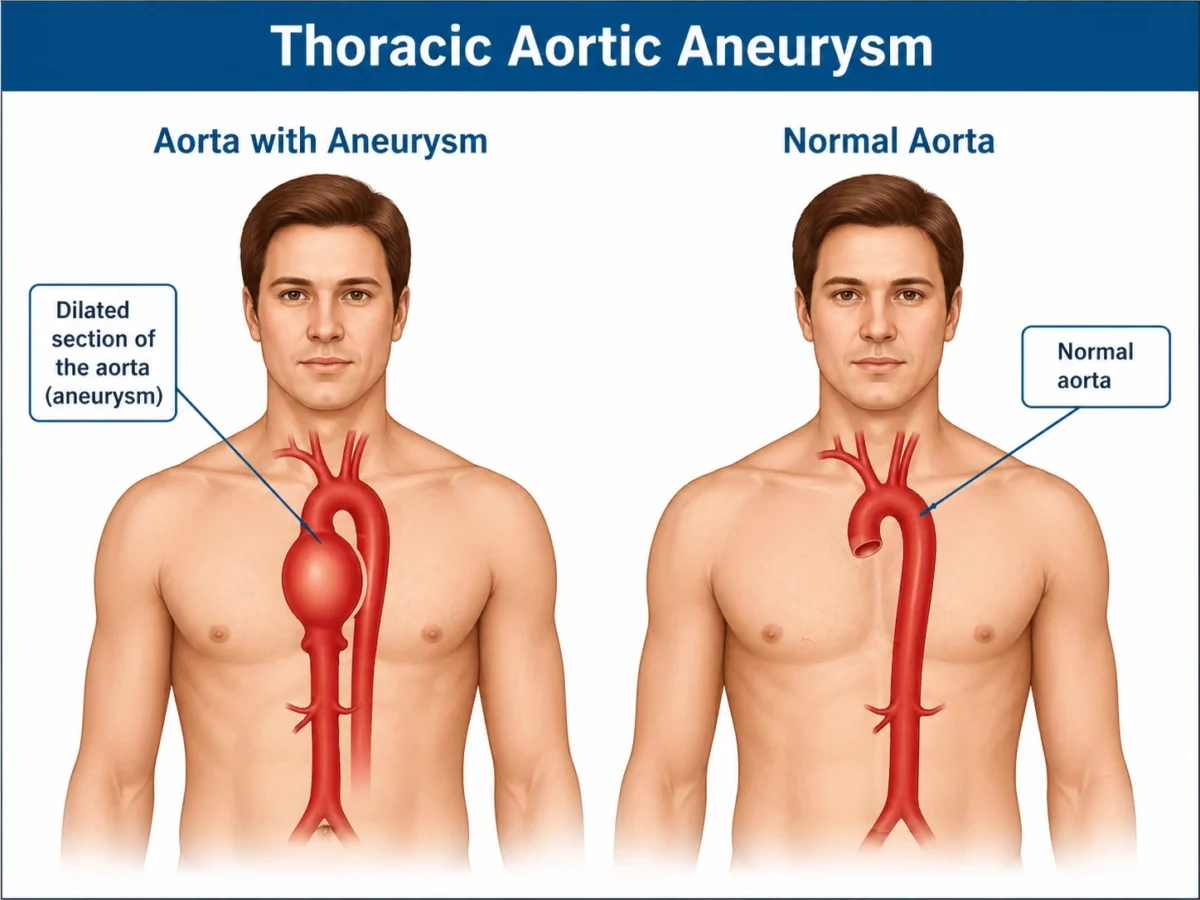

Surgical Treatment & Repair of Aneurysms of the Ascending, Arch, and Descending Thoracic Aorta
Thoracic aortic aneurysms are serious vascular conditions that require specialized diagnosis and, in many cases, surgical treatment. The aorta is the largest blood vessel in the human body and carries blood from the heart to all organs. When a segment of the aorta becomes dilated or its wall weakens, an aneurysm is formed, which can develop into a dangerous condition if not treated in time.
Modern cardiac surgery offers effective solutions for the surgical repair of aneurysms of the ascending aorta, the aortic arch, and the descending thoracic aorta, aiming to prevent vessel rupture and restore normal blood flow.
What is a Thoracic Aortic Aneurysm?
A thoracic aortic aneurysm is defined as the abnormal dilation of a segment of the aorta within the chest. This dilation is caused by weakening of the vessel wall and may gradually increase over time.
The thoracic aorta is divided into three main parts:
- Ascending aorta, which begins from the heart
- Aortic arch, which curves backward
- Descending thoracic aorta, which continues toward the lower part of the body
An aneurysm can occur in any of these segments.
Causes of Aneurysm Formation
Aortic aneurysms can be caused by various factors, such as:
- Atherosclerosis
- Arterial hypertension
- Genetic syndromes (e.g., Marfan syndrome)
- Degenerative changes in the vessel wall
- Trauma
- Inflammatory vascular diseases
- Congenital abnormalities
The risk of developing an aneurysm increases with age and is often associated with cardiovascular risk factors.
Symptoms of Aortic Aneurysm
In many cases, aneurysms develop without noticeable symptoms and are discovered incidentally during imaging examinations.
When symptoms do occur, they may include:
- Chest or back pain
- Shortness of breath
- Hoarseness
- Difficulty swallowing
- Pain in the shoulders or neck
In the event of aneurysm rupture, symptoms are severe and require immediate medical attention.
Diagnosis
The diagnosis of thoracic aortic aneurysms is performed using modern imaging tests, such as:
- Chest CT scan
- Magnetic resonance imaging (MRI)
- Echocardiography
- Angiography
These examinations allow the doctor to assess the size, location, and progression of the aneurysm.
When is Surgical Treatment Required
Surgical repair is recommended when:

The aneurysm is large in size

It is rapidly increasing in diameter

It causes symptoms

There is a high risk of rupture
Surgical Repair of Aneurysm
Surgical repair involves replacing the affected section of the aorta with a specialized synthetic vascular graft.
During the procedure:
- The diseased segment of the aorta is isolated
- The aneurysmal section is removed
- An artificial vascular graft is placed
- Normal blood flow is restored
This procedure is performed by specialized cardiac surgery teams and requires a high level of expertise.
Procedures in Different Parts of the Aorta

Ascending Aorta
Repair of the ascending aorta is often combined with procedures on the aortic valve.

Aortic Arch
Surgical repair of the aortic arch is more complex, as this area includes major vessels that supply blood to the brain.

Descending Thoracic Aorta
Treatment can be performed either with open surgery or with endovascular techniques, depending on the case.

Modern Surgical Techniques
Advances in cardiac surgery have made it possible to apply advanced techniques that significantly improve surgical outcomes.
One of the most important developments is endoscopic cardiac surgery, which is performed through smaller incisions.
The advantages include:
- Reduced surgical trauma
- Less postoperative pain
- Faster recovery
- Shorter hospital stay
- Improved cosmetic outcome
The selection of the appropriate technique is based on the individual needs of each patient.
(FAQ)
It is the dilation of a section of the aorta due to weakening of the vessel wall.
Yes. If the aneurysm grows large, there is a risk of rupture, which can be life-threatening.
Usually with a CT scan, MRI, or echocardiography.
When the aneurysm exceeds a certain size or causes symptoms.
The duration of the procedure usually ranges from 4 to 6 hours.
Full recovery may take several weeks, depending on the procedure and the patient’s condition.
With extensive experience in international medical centers and numerous scientific distinctions, cardiac surgeon in Athens, Dr. E. Andreas Agathos, is a reliable choice for patients seeking specialized cardiac surgical care.
He is a Doctorate holder from the University of Athens and holds significant international titles, including:
- FRCS – Royal College of Surgeons of Edinburgh
- FACS – American College of Surgeons
- FETCS – European College of Surgeons
- FICS – International College of Surgeons
Dr. Agathos also holds multiple international patents (World patent, USA patent, European patent) for the development of new biological materials, innovative heart valves, and anti-calcification treatment methods.
He has served as Director of Cardiac Surgery at leading private hospitals in Athens, including Hygeia, Athens Medical Center, and Euroclinic Athens, and collaborates with top international hospitals such as Massachusetts General Hospital in Boston and Triemli Hospital in Zurich.
With over 5,000 procedures performed in Greece and abroad, he has specialized expertise in endoscopic cardiac surgery, offering modern and less invasive solutions to patients.
His international experience, scientific innovation, and global patents in the field of heart valves establish Dr. Agathos as one of the most specialized cardiac surgeons in modern cardiac surgery.