


Removal of Tumors of the Heart, Mediastinum, and Pericardium
Οι όγκοι που εμφανίζονται στην περιοχή της καρδιάς, του μεσοθωρακίου και του περικαρδίου αποτελούν σχετικά σπάνιες αλλά σοβαρές παθολογικές καταστάσεις. Η έγκαιρη διάγνωση και η σωστή χειρουργική αντιμετώπιση είναι καθοριστικής σημασίας για την αποκατάσταση της υγείας του ασθενούς και την αποφυγή επιπλοκών.
Η αφαίρεση όγκων καρδιάς, μεσοθωρακίου και περικαρδίου πραγματοποιείται από εξειδικευμένους καρδιοθωρακοχειρουργούς με σύγχρονες τεχνικές που προσφέρουν υψηλά ποσοστά επιτυχίας και σημαντική βελτίωση της ποιότητας ζωής των ασθενών.
What are tumors of the heart and mediastinum
Tumors that appear in the heart or surrounding tissues can be benign or malignant. Benign tumors are more common and are usually successfully treated with surgical removal.
These tumors may occur:
- inside the heart chambers
- in the pericardium (the lining of the heart)
- in the mediastinum (the area between the lungs where important organs and vessels are located)
The presence of a tumor may affect the normal function of the heart or put pressure on adjacent structures in the chest.
Symptoms That May Appear
Symptoms depend on the size and location of the tumor. In some cases, tumors may not cause symptoms and are discovered incidentally during examinations.
When symptoms occur, they may include:
- shortness of breath
- chest pain
- palpitations
- dizziness or fainting episodes
- cough or difficulty breathing
- swelling in the face or upper limbs
- cardiac arrhythmias
In severe cases, heart function may be significantly affected.
Most Common Types of Tumors
Tumors that appear in the heart and mediastinum include:
Benign Heart Tumors
The most common is the cardiac myxoma, a benign tumor that usually appears in the left atrium.
Other benign tumors include:
- fibromas
- lipomas
- rhabdomyomas
Mediastinal Tumors
In the mediastinum, the following may occur:
- thymomas
- cysts
- lymphomas
- neurogenic tumors
Pericardial Tumors
Pericardial tumors are more rare but may cause fluid accumulation around the heart and affect its function.
Diagnosis
The diagnosis of tumors of the heart and mediastinum is carried out using modern imaging tests such as:
- echocardiogram
- chest CT scan (computed tomography)
- magnetic resonance imaging (MRI)
- cardiac catheterization
- tissue biopsy (when required)
These tests help determine the size, location, and nature of the tumor.
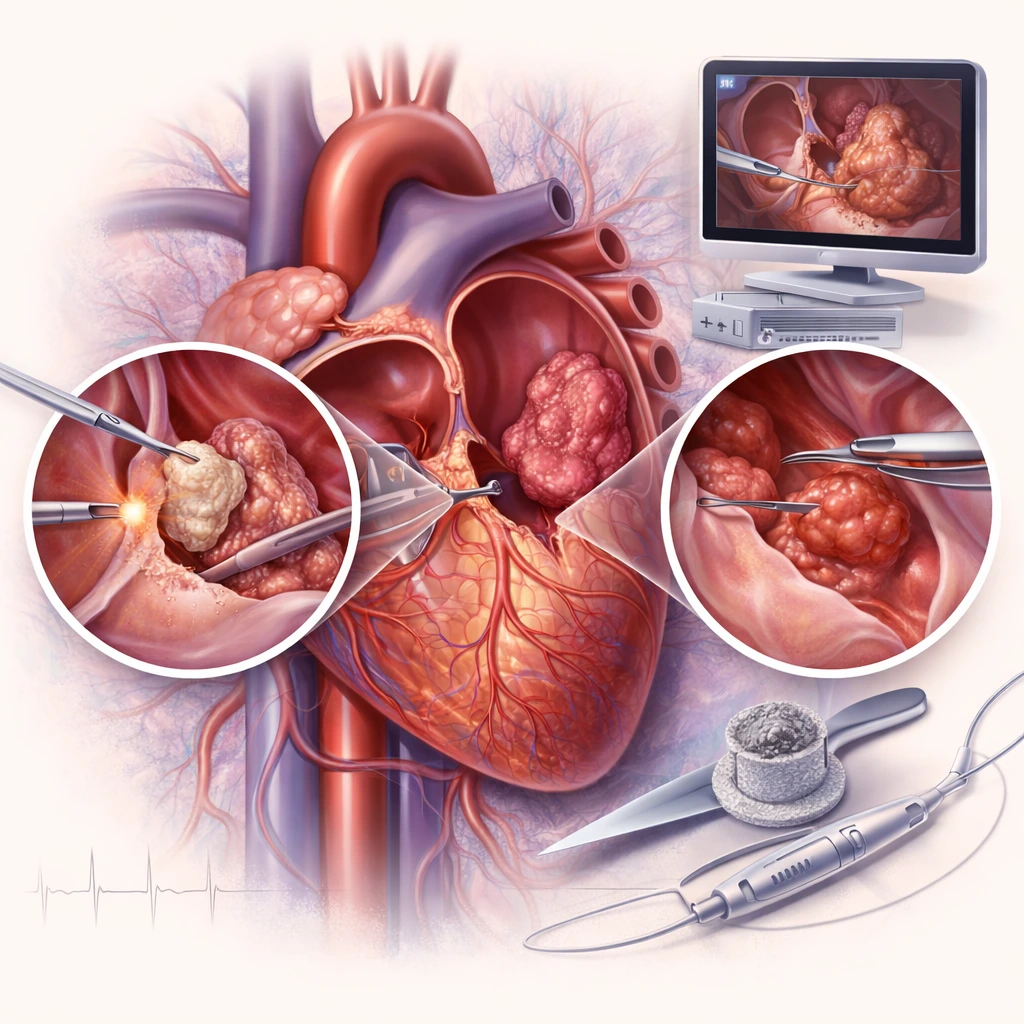
Surgical Removal of Tumors
Surgical removal is the most effective treatment for many tumors of the heart and mediastinum.
During the procedure, the cardiothoracic surgeon removes the tumor carefully in order to preserve vital structures of the heart and major blood vessels.
The goals of the procedure are:

Removal
Complete removal of the tumor
Restoration
Restoration of the normal function of the heart
Prevention
Prevention of complications
Modern Surgical Techniques
Advances in cardiac surgery have enabled the use of modern techniques that reduce surgical trauma.
One of the most important developments is endoscopic cardiac surgery, which is performed through small incisions.
The advantages include:
- smaller surgical trauma
- less postoperative pain
- faster recovery
- shorter hospital stay
- better aesthetic outcome
The choice of the appropriate technique is always individualized.
Postoperative Course and Recovery
After the procedure, the patient is monitored in a specialized unit.
The length of hospitalization depends on:
- the size of the tumor
- its location
- the patient’s overall condition
- the type of procedure
Most patients can gradually return to their daily activities within a few weeks.
(FAQ)
No. Primary heart tumors are relatively rare.
No. Many tumors are benign and can be successfully removed.
The procedure is performed by specialized cardiac surgery teams and has high success rates.
The duration depends on the complexity of the case, usually between 3 and 6 hours.
Full recovery may take from a few weeks to a few months.
In most cases of benign tumors, complete removal significantly reduces the risk of recurrence.
With significant experience in international medical centers and numerous scientific distinctions, cardiac surgeon in Athens Dr. E. Andreas Agathos is a reliable choice for patients seeking specialized cardiac surgical care.
He is a Doctorate holder from the University of Athens and holds important international titles:
- FRCS – Royal College of Surgeons of Edinburgh
- FACS – American College of Surgeons
- FETCS – European College of Surgeons
- FICS – International College of Surgeons
Dr. Agathos also holds multiple international patents (World patent, USA patent, European patent) for the development of new biological materials, innovative heart valves, and anti-calcification treatment methods.
He has served as Director of Cardiac Surgery at hospitals such as Hygeia, Athens Medical Center, and Euroclinic Athens, while also collaborating with leading international hospitals such as Massachusetts General Hospital in Boston and Triemli Hospital in Zurich.
With more than 5,000 surgeries in Greece and abroad, he has particular expertise in endoscopic cardiac surgery, offering modern and less invasive solutions for patients.
His international experience, scientific innovation, and globally recognized patents in the field of cardiac valves make Dr. Agathos one of the most specialized cardiac surgeons in modern cardiac surgery.