


Beating Heart Bypass Surgery – Off-Pump Coronary Artery Bypass Technique
Coronary Artery Bypass Grafting (CABG), commonly known as heart bypass surgery, is one of the most effective procedures for treating coronary artery disease. In modern cardiac surgery, an advanced technique has been developed that allows the operation to be performed without stopping the heart. This method is known as Beating Heart Bypass or Off-Pump Bypass, meaning bypass surgery performed on a beating heart.
This technique represents a significant advancement in the surgical treatment of coronary artery disease, as it enables the surgeon to perform the operation while the heart continues to beat normally, without the use of cardiopulmonary bypass (heart-lung machine).
What is Coronary Artery Disease
Coronary artery disease is a condition in which the coronary arteries, which supply the heart with oxygenated blood, become narrowed or blocked due to atherosclerotic plaques.
These narrowings reduce blood flow to the heart muscle and may cause:
- angina (chest pain)
- shortness of breath
- fatigue
- arrhythmias
- myocardial infarction (heart attack)
When the blockages are extensive or multiple, bypass surgery is the most effective treatment option.
What is Bypass Surgery
Bypass surgery creates a new pathway for blood flow to the heart, bypassing the narrowed or blocked coronary arteries.
For the bypass, blood vessels from other parts of the body are used, such as:
- internal mammary artery
- radial artery
- saphenous vein
These vessels are connected to the coronary arteries to restore normal blood flow to the heart.
Advantages of the Beating Heart Technique
The Beating Heart technique offers significant advantages compared to the conventional method:
- avoidance of the cardiopulmonary bypass machine
- lower risk of complications
- reduced inflammatory response of the body
- less blood loss
- faster recovery
- shorter hospital stay
For certain high-risk patients, this technique may be the safest option.
When is the Beating Heart Technique Applied
The choice of technique is individualized for each patient. This method can be applied in cases such as:
- multiple coronary artery stenoses
- patients with high surgical risk
- patients with serious comorbidities
- elderly patients
- patients with increased risk of complications from cardiopulmonary bypass
The decision is made after a thorough cardiological evaluation.
How the Procedure is Performed
The procedure is carried out in a specialized cardiac surgery center.
The basic stages include:
- General anesthesia and patient preparation
- Access to the heart through the chest
- Stabilization of specific areas of the heart using special devices
- Placement of the grafts onto the coronary arteries
- Verification of proper blood flow to the heart muscle
The duration of the procedure usually ranges from 3 to 5 hours.
Postoperative Course

Surgery
After the procedure, the patient is transferred to the intensive care unit for monitoring.
Hospital Stay
The hospital stay is usually shorter compared to the conventional bypass method.
Recovery
Full recovery occurs gradually over a few weeks, with the support of a cardiac rehabilitation program.
What is the Beating Heart Technique
In traditional bypass surgery, the heart is temporarily stopped and blood circulation is maintained through a cardiopulmonary bypass machine.
In the Beating Heart technique, the procedure is performed while the heart continues to beat. Specialized stabilization devices allow the cardiac surgeon to operate with precision on specific areas of the heart without interrupting its function.
This method has evolved significantly in recent years and is applied in selected patient cases.
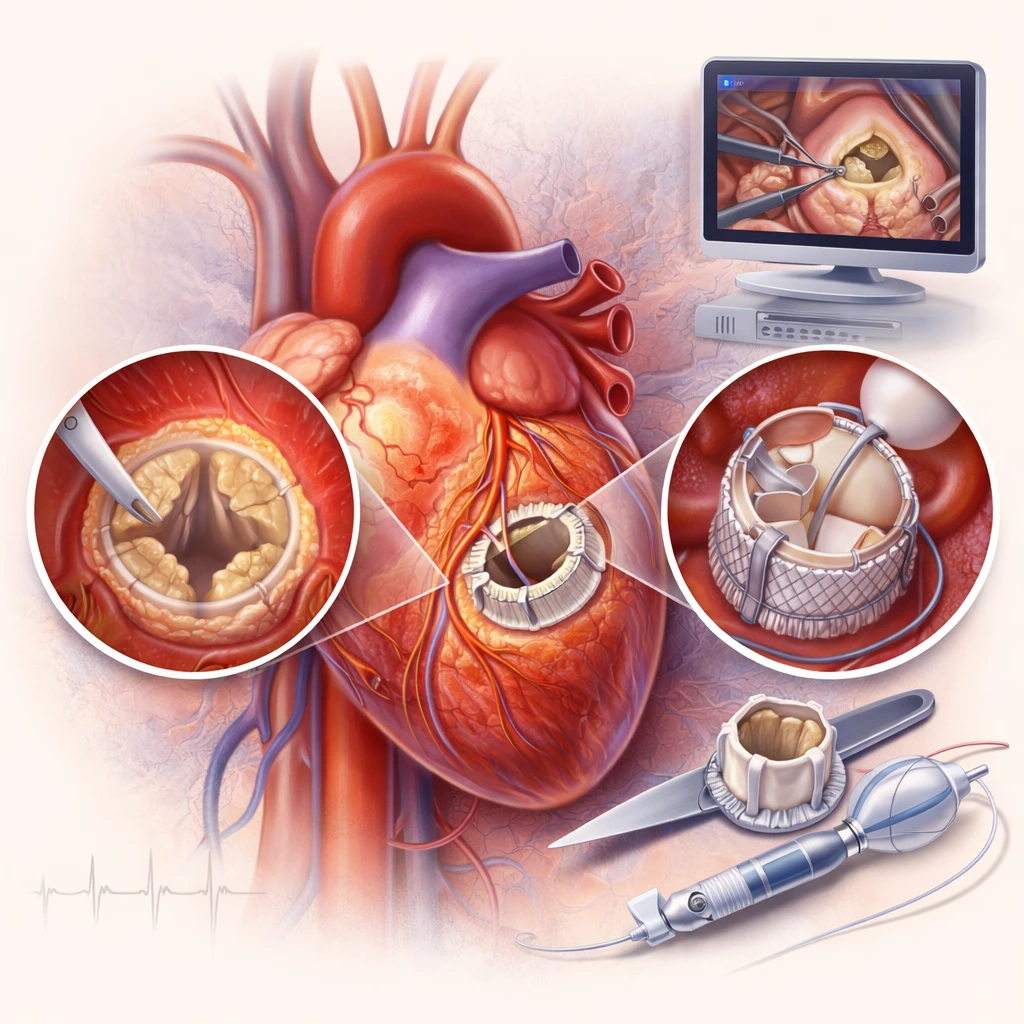
Aortic Valve Replacement
When the valve cannot be repaired, replacement is performed. The damaged valve is removed and replaced with an artificial valve.
There are two main types of valves:
Mechanical valves
They are highly durable and have a long lifespan, but they require lifelong anticoagulant therapy.
Biological valves
They are made from biological tissues and usually do not require long-term anticoagulant therapy, but they have a shorter lifespan.
The choice of the appropriate valve depends on the patient’s age, medical history, and other clinical factors.
(FAQ)
It is a bypass procedure performed while the heart continues to beat, without the use of a cardiopulmonary bypass machine.
Yes. When performed by an experienced cardiac surgery team, the method is safe and effective.
Lower risk of complications, faster recovery, and shorter hospital stay.
Usually 3 to 5 hours, depending on the complexity of the case.
Most patients gradually return to their daily activities within 4 to 8 weeks.
Not always. The choice of method depends on the condition of the coronary arteries and the patient’s overall health.
With significant experience in international medical centers and numerous scientific distinctions, cardiac surgeon in Athens Dr. E. Andreas Agathos is a reliable choice for patients seeking specialized cardiac surgical care.
He is a Doctorate holder from the University of Athens and holds important international titles:
- FRCS – Royal College of Surgeons of Edinburgh
- FACS – American College of Surgeons
- FETCS – European College of Surgeons
- FICS – International College of Surgeons
Dr. Agathos also holds multiple international patents (World patent, USA patent, European patent) for the development of new biological materials, innovative heart valves, and anti-calcification treatment methods.
He has served as Director of Cardiac Surgery at hospitals such as Hygeia, Athens Medical Center, and Euroclinic Athens, while also collaborating with leading international hospitals such as Massachusetts General Hospital in Boston and Triemli Hospital in Zurich.
With more than 5,000 surgeries in Greece and abroad, he has particular expertise in endoscopic cardiac surgery, offering modern and less invasive solutions for patients.
His international experience, scientific innovation, and globally recognized patents in the field of cardiac valves make Dr. Agathos one of the most specialized cardiac surgeons in modern cardiac surgery.