


Cardiomyoplasty with the Dorr Procedure – Surgical Restoration of the Left Ventricle
Cardiomyoplasty with the Dorr technique is a specialized cardiac surgical procedure used to restore the function of the left ventricle in patients with severe heart failure, usually following an extensive myocardial infarction. This technique aims to remodel the heart and improve the efficiency of its contraction.
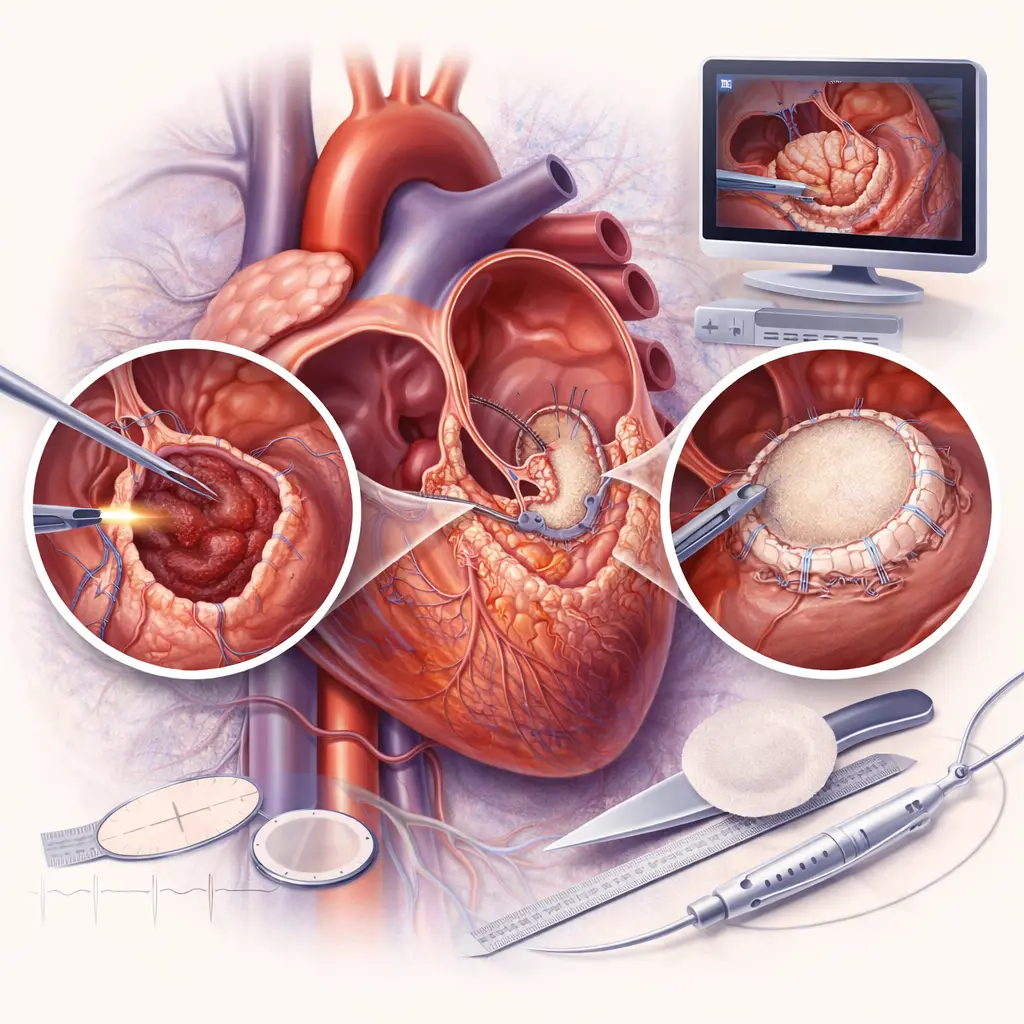
After a major heart attack, part of the heart muscle may be damaged and turn into scar tissue that does not contract. This leads to dilation of the left ventricle and a significant reduction in cardiac function. The Dorr procedure, also known as Surgical Ventricular Restoration, restores the normal shape and size of the heart, thereby improving its function.
What is Cardiomyoplasty
Cardiomyoplasty is a surgical technique aimed at improving the function of the heart muscle when it has been damaged. In cases where the heart muscle has been affected after a heart attack, the heart may change shape, becoming larger and less efficient.
This change is called left ventricular remodeling and can lead to heart failure. Surgical restoration using the Dorr technique helps restore the normal shape of the heart.
What is the Dorr Procedure
The Dorr procedure is a surgical technique developed to treat dilation of the left ventricle after a heart attack. During the procedure, the damaged portion of the heart muscle is removed or excluded, and the cavity of the heart is reshaped.
The procedure includes:
- removal of non-functional tissue
- reshaping of the left ventricle
- restoration of the heart’s normal shape
- improvement of cardiac contraction
In this way, the volume of the ventricle is reduced and the efficiency of heart function is improved.
When is the Dorr Procedure Performed
The procedure is recommended for patients with:
- severe heart failure
- dilation of the left ventricle
- scar tissue after myocardial infarction
- left ventricular aneurysm
- reduced ejection fraction
In many cases, the procedure is combined with coronary artery bypass grafting (bypass) or surgeries on the heart valves.
Goals of Surgical Restoration
Surgical restoration of the left ventricle has multiple goals:
- restoration of the heart’s normal shape
- reduction of the size of the left ventricle
- improvement of cardiac function
- increase in cardiac output
- improvement of the patient’s quality of life
This technique can significantly reduce the symptoms of heart failure and improve the patient’s daily functional capacity.
Aortic Valve Repair
In some cases, the valve can be repaired without the need for replacement. Valve repair preserves the patient’s natural valve and restores its function through specialized surgical techniques.
The advantages of repair include:
- preservation of the heart’s natural anatomy
- avoidance of long-term anticoagulant therapy
- improved hemodynamic function
However, not all cases are suitable for repair, and the final decision is made after a thorough evaluation.
How the Procedure is Performed
The procedure is carried out in a specialized cardiac surgery center.
The main steps include:

Heart
Surgical access to the heart
Identification
Identification of the damaged part of the myocardium
Removal
Removal or exclusion of scar tissue
Reconstruction
Reconstruction of the left ventricle using a specialized technique
Restoration
Restoration of normal circulation
Modern Cardiac Surgery Techniques
The evolution of cardiac surgery has enabled the use of more advanced and less invasive techniques. One of the most important developments is endoscopic cardiac surgery, which allows procedures to be performed through smaller incisions and ensures faster recovery.
The advantages of modern techniques include:
- smaller surgical trauma
- less postoperative pain
- faster recovery
- shorter hospital stay
The choice of the appropriate technique depends on the patient’s overall condition and the specific characteristics of the disease.
Benefits of the Dorr Procedure
Surgical restoration of the left ventricle can offer significant benefits:
- improvement of cardiac function
- reduction of heart failure symptoms
- better exercise tolerance
- improved quality of life
- reduction in recurrent hospitalizations
In selected patients, the procedure can provide long-term stabilization of cardiac function.
Postoperative Course
After the procedure, the patient is monitored in an intensive care unit for a short period.
Full recovery depends on:
- the patient’s overall condition
- the severity of the heart disease
- any coexisting conditions
Proper cardiological follow-up and adherence to medical instructions contribute to successful recovery.
(FAQ)
It is a cardiac surgical procedure that restores the shape and function of the left ventricle of the heart after a heart attack.
It is applied to patients with heart failure and dilation of the left ventricle due to damage to the heart muscle.
Yes. It is often combined with bypass surgery or heart valve procedures.
The duration usually ranges from 3 to 5 hours.
Full recovery may take several weeks.
Full recovery may take several weeks.
With significant experience in international medical centers and numerous scientific distinctions, cardiac surgeon in Athens Dr. E. Andreas Agathos is a reliable choice for patients seeking specialized cardiac surgical care.
He is a Doctorate holder from the University of Athens and holds important international titles:
- FRCS – Royal College of Surgeons of Edinburgh
- FACS – American College of Surgeons
- FETCS – European College of Surgeons
- FICS – International College of Surgeons
Dr. Agathos also holds multiple international patents (World patent, USA patent, European patent) for the development of new biological materials, innovative heart valves, and anti-calcification treatment methods.
He has served as Director of Cardiac Surgery at hospitals such as Hygeia, Athens Medical Center, and Euroclinic Athens, while also collaborating with leading international hospitals such as Massachusetts General Hospital in Boston and Triemli Hospital in Zurich.
With more than 5,000 surgeries in Greece and abroad, he has particular expertise in endoscopic cardiac surgery, offering modern and less invasive solutions for patients.
His international experience, scientific innovation, and globally recognized patents in the field of cardiac valves make Dr. Agathos one of the most specialized cardiac surgeons in modern cardiac surgery.