


Mitral Valve Repair or Replacement
The mitral valve is one of the main valves of the heart and plays a crucial role in the proper circulation of blood within the cardiovascular system. When its function is impaired, cardiac performance and the patient’s overall health can be significantly affected. In cases of severe dysfunction, modern cardiac surgery offers effective solutions through mitral valve repair or replacement, restoring the normal function of the heart.
Today, mitral valve procedures represent one of the most advanced and successful forms of cardiac surgery, with high success rates and significant improvement in patients’ quality of life.
What is the Mitral Valve?
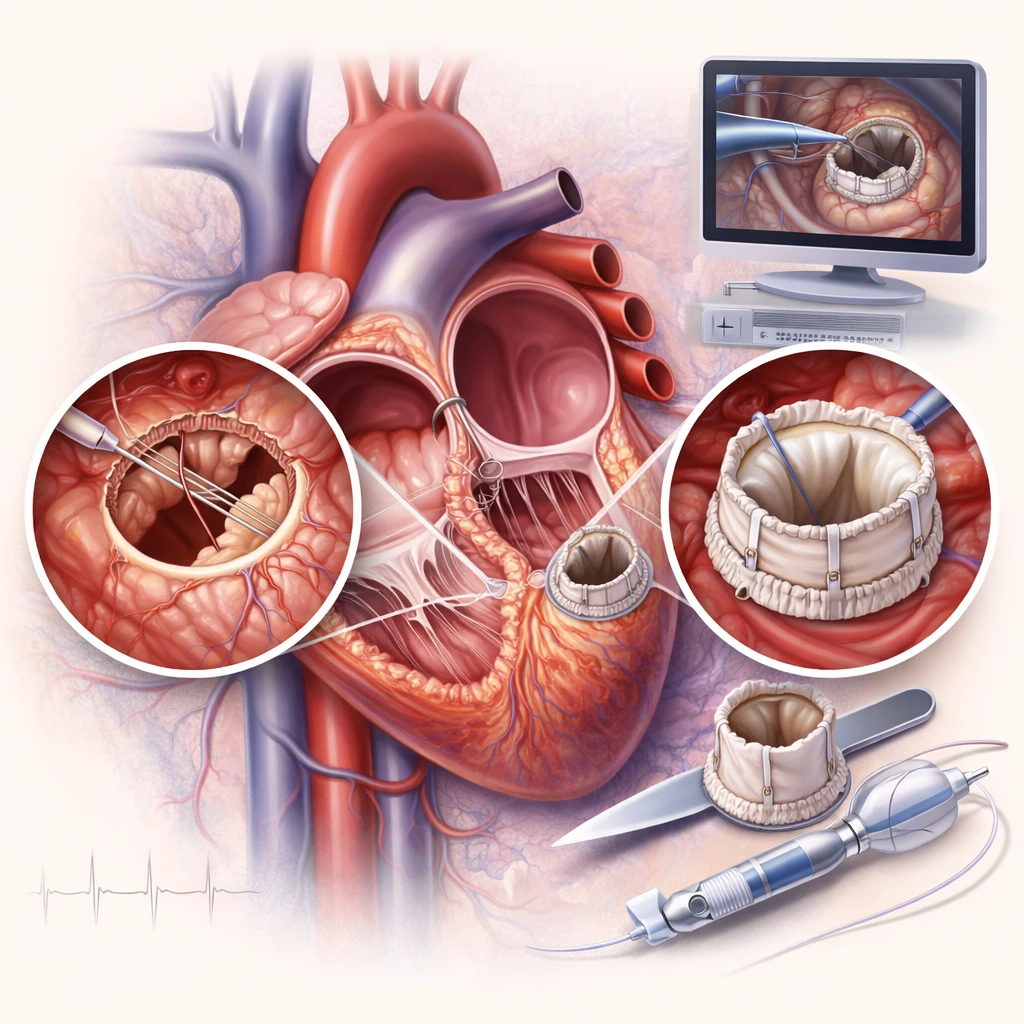
The mitral valve is located between the left atrium and the left ventricle of the heart. Its function is to allow blood to flow from the atrium to the ventricle and to prevent the backflow of blood.
When this valve becomes dysfunctional, two main pathological conditions may occur:
Mitral Valve Stenosis
The valve becomes narrowed and does not allow blood to pass easily into the left ventricle.
Mitral Valve Regurgitation (Insufficiency)
The valve does not close properly, causing blood to flow back into the left atrium.
In both cases, the heart is significantly burdened, as it must work harder to maintain adequate blood circulation.
Causes of Mitral Valve Disease
Problems of the mitral valve may be caused by various factors, such as:
- Degenerative changes of the valve
- Rheumatic fever
- Congenital heart diseases
- Heart failure
- Heart infections (endocarditis)
- Ischemic heart disease
The progression of the condition may be gradual and can take years before serious symptoms appear.
Symptoms That May Occur
Patients with mitral valve disease may experience symptoms such as:
- Shortness of breath during physical activity or at rest
- Easy fatigue
- Palpitations
- Dizziness or fainting episodes
- Swelling in the legs
- Reduced exercise tolerance
In advanced stages, valve dysfunction may lead to heart failure.
When is Surgical Treatment Required
The decision for surgery is made after a thorough cardiological evaluation, which includes tests such as echocardiography, CT or MRI scans, and a full cardiac assessment.
Surgery is recommended when:
- The valve damage is severe
- Significant symptoms are present
- Heart function begins to deteriorate
- There is an increased risk of complications
Early surgical intervention can prevent serious complications and restore the normal function of the heart.
Mitral Valve Replacement
When the valve has sustained extensive damage and cannot be repaired, replacement is required.
During the procedure, the damaged valve is removed and replaced with an artificial valve.
The main types of valves are:

Mechanical Valves
They have a long lifespan but require lifelong anticoagulant therapy.
Biological Valves
They are made from biological tissues and usually do not require long-term anticoagulation, but have a shorter lifespan.
Choice
The selection of the appropriate valve is made on an individualized basis for each patient.
Mitral Valve Repair
In many cases, the best option is mitral valve repair. This technique allows preservation of the patient’s natural valve while restoring its function.
The advantages of repair include:
- Better physiological heart function
- Lower risk of complications
- Avoidance of long-term anticoagulant therapy
- Improved long-term outcomes
The feasibility of repair depends on the nature and extent of the valve damage.
Aortic Valve Replacement
When the valve cannot be repaired, replacement is required. The damaged valve is removed and replaced with an artificial valve.
The two main types of valves are:
Mechanical Valves
They are highly durable and have a long lifespan, but require lifelong anticoagulant therapy.
Biological Valves
They are made from biological tissues and usually do not require long-term anticoagulation, but have a shorter lifespan.
The choice of the appropriate valve depends on the patient’s age, medical history, and other clinical factors.
Endoscopic Cardiac Surgery – The Modern Approach
Advances in cardiac surgery have led to the development of more modern and less invasive techniques, such as endoscopic cardiac surgery.
With this method, the procedure is performed through smaller incisions, offering:
- Less tissue trauma
- Reduced blood loss
- Less postoperative pain
- Faster recovery
- Shorter hospital stay
This technique is performed by specialized cardiac surgery teams with extensive experience.
FAQ)
It is the condition in which the mitral valve does not close properly, allowing blood to flow back into the left atrium.
The duration of the procedure usually ranges from 3 to 5 hours, depending on the complexity of the case.
Recovery usually lasts from a few weeks to a few months, depending on the method used.
Mitral valve procedures have high success rates when performed by specialized cardiac surgeons.
Most patients return to their normal daily activities within a few weeks after the procedure.
Trust & Scientific Expertise
With extensive experience in international medical centers and numerous scientific distinctions, cardiac surgeon in Athens, Dr. E. Andreas Agathos, is a reliable choice for patients seeking specialized cardiac surgical care.
He is a Doctorate holder from the University of Athens and holds significant international titles, including:
- FRCS – Royal College of Surgeons of Edinburgh
- FACS – American College of Surgeons
- FETCS – European College of Surgeons
- FICS – International College of Surgeons
Dr. Agathos also holds multiple international patents (World patent, USA patent, European patent) for the development of new biological materials, innovative heart valves, and anti-calcification treatment methods.
He has served as Director of Cardiac Surgery at leading private hospitals in Athens, including Hygeia, Athens Medical Center, and Euroclinic Athens, while also collaborating with top international hospitals such as Massachusetts General Hospital in Boston and Triemli Hospital in Zurich.
With over 5,000 procedures performed in Greece and abroad, he has developed specialized expertise in endoscopic cardiac surgery, offering modern and less invasive solutions to patients.
His international experience, scientific innovation, and global patents in the field of heart valves establish Dr. Agathos as one of the most highly specialized cardiac surgeons in modern cardiac surgery.