


Aortic Valve Repair or Replacement
The aortic valve is one of the four main heart valves and plays a crucial role in the proper function of the cardiovascular system. It regulates the flow of blood from the heart to the aorta and, consequently, to the entire body. When the aortic valve malfunctions, blood circulation can be significantly affected, leading to serious cardiac problems.
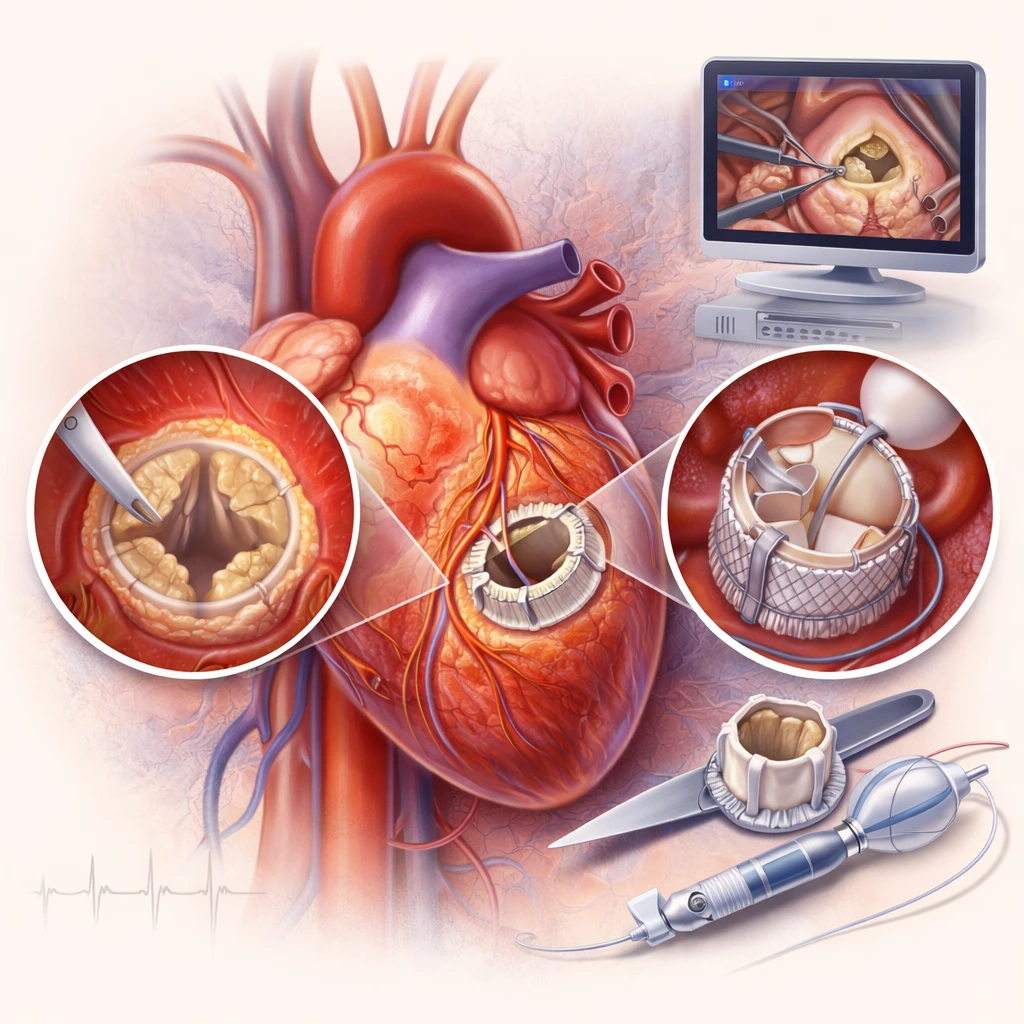
In cases of severe valve damage, modern cardiac surgery techniques allow either repair or replacement of the aortic valve, restoring normal heart function and significantly improving the patient’s quality of life.
What is the Aortic Valve?
The aortic valve is located between the left ventricle of the heart and the aorta. Its role is to open when the heart pumps blood toward the body and to close immediately afterward, preventing blood from flowing back into the heart.
When the valve does not function properly, two main conditions may occur:
Aortic Valve Stenosis
The valve becomes narrowed and does not open adequately, making it difficult for blood to flow into the aorta.
Aortic Valve Regurgitation (Insufficiency)
The valve does not close properly, allowing blood to flow back into the heart.
In both cases, the heart is forced to work harder to meet the body’s needs.
Symptoms That May Occur
Aortic valve problems may develop gradually and progress over time. The most common symptoms include:
- Shortness of breath during exercise or even at rest
- Chest pain or pressure
- Dizziness or fainting episodes
- Severe fatigue
- Palpitations
- Reduced tolerance to physical activity
When symptoms worsen or heart function is significantly affected, surgical intervention may be required.
When is Valve Repair or Replacement Needed
The decision for surgery is made by a specialized cardiologist and cardiac surgeon after a thorough diagnostic evaluation. Surgery is usually recommended when:
- The valve damage is severe
- Symptoms significantly affect daily life
- There is a risk of heart failure
- Heart function begins to deteriorate
Early treatment is particularly important, as it can prevent serious complications.
Aortic Valve Repair
In certain cases, the valve can be repaired without the need for replacement. Aortic valve repair preserves the patient’s native valve and restores its function through specialized surgical techniques.
The advantages of repair include:
- Preservation of the heart’s natural anatomy
- Avoidance of long-term anticoagulation therapy
- Improved hemodynamic function
However, not all cases are suitable for repair, and the final decision is made after a comprehensive evaluation.
Recovery After the Procedure

Time
From a few weeks to a few months, depending on the surgical method and the patient’s overall condition.
Procedure Duration
Usually ranges between 2 and 4 hours, depending on the complexity of the case.
Return to Daily Activities
Most patients can return to their daily activities within a short period of time.
Modern Cardiac Surgery Techniques
Advances in cardiac surgery have enabled the use of more modern and less invasive techniques. One of the most significant developments is endoscopic cardiac surgery, which allows procedures to be performed through smaller incisions and enables faster recovery.
The advantages of modern techniques include:
- Smaller surgical trauma
- Less postoperative pain
- Faster recovery
- Shorter hospital stay
The choice of the appropriate technique depends on the patient’s overall condition and the specific characteristics of the disease.
Aortic Valve Replacement
When the valve cannot be repaired, replacement is required. The damaged valve is removed and replaced with an artificial valve.
The two main types of valves are:
Mechanical valves
They are highly durable and have a long lifespan, but require lifelong anticoagulant therapy.
Biological valves
They are made from biological tissues and usually do not require long-term anticoagulation therapy; however, they have a shorter lifespan.
The choice of the appropriate valve depends on the patient’s age, medical history, and other clinical factors.
(FAQ)
It is a condition in which the aortic valve becomes narrowed and does not open fully, restricting blood flow to the aorta.
Aortic valve regurgitation can place significant strain on the heart and, if left untreated, may lead to heart failure.
The duration of the procedure usually ranges between 2 and 4 hours, depending on the complexity of the case.
Full recovery may take from a few weeks to several months, depending on the surgical method and the patient’s overall condition.
Aortic valve procedures have high success rates when performed by specialized cardiac surgery teams.
Yes. After valve repair or replacement, most patients return to normal activities and experience a significant improvement in their quality of life.
With extensive experience in international medical centers and numerous scientific distinctions, cardiac surgeon in Athens, Dr. E. Andreas Agathos, is a reliable choice for patients seeking specialized cardiac surgical care.
He is a Doctorate holder from the University of Athens and holds significant international titles, including:
- FRCS – Royal College of Surgeons of Edinburgh
- FACS – American College of Surgeons
- FETCS – European College of Surgeons
- FICS – International College of Surgeons
Dr. Agathos also holds multiple international patents (World patent, USA patent, European patent) for the development of new biological materials, innovative heart valves, and anti-calcification treatment methods.
He has served as Director of Cardiac Surgery at leading private hospitals in Athens, including Hygeia, Athens Medical Center, and Euroclinic Athens, and collaborates with top international hospitals such as Massachusetts General Hospital in Boston and Triemli Hospital in Zurich.
With over 5,000 procedures performed in Greece and abroad, he has specialized expertise in endoscopic cardiac surgery, offering modern and less invasive solutions to patients.
His international experience, scientific innovation, and global patents in the field of heart valves establish Dr. Agathos as one of the most specialized cardiac surgeons in modern cardiac surgery.